








For months, we’ve been unpacking the realities behind epoxy pipe lining for domestic pipes. We’ve covered the costs, safety issues, invasiveness, installation problems, and limited warranties that often accompany lining solutions. The goal of the series: to help you weigh the risks and realities of pipe lining and decide whether lining or pipe replacement is the better path forward to fix your property’s piping issues.
This final post wraps up the series by looking at what happens after you line your domestic water pipes. Because even when an installation goes smoothly, the challenges with pipe lining continue.
Here’s a look at how pipe lining can affect the performance and maintenance of your community’s plumbing.
> Go back to the beginning: Check out our kickoff post, Epoxy Pipe Lining for Domestic Pipes: Busting the Myths.
Pipe Lining’s Impact on Pipe Performance
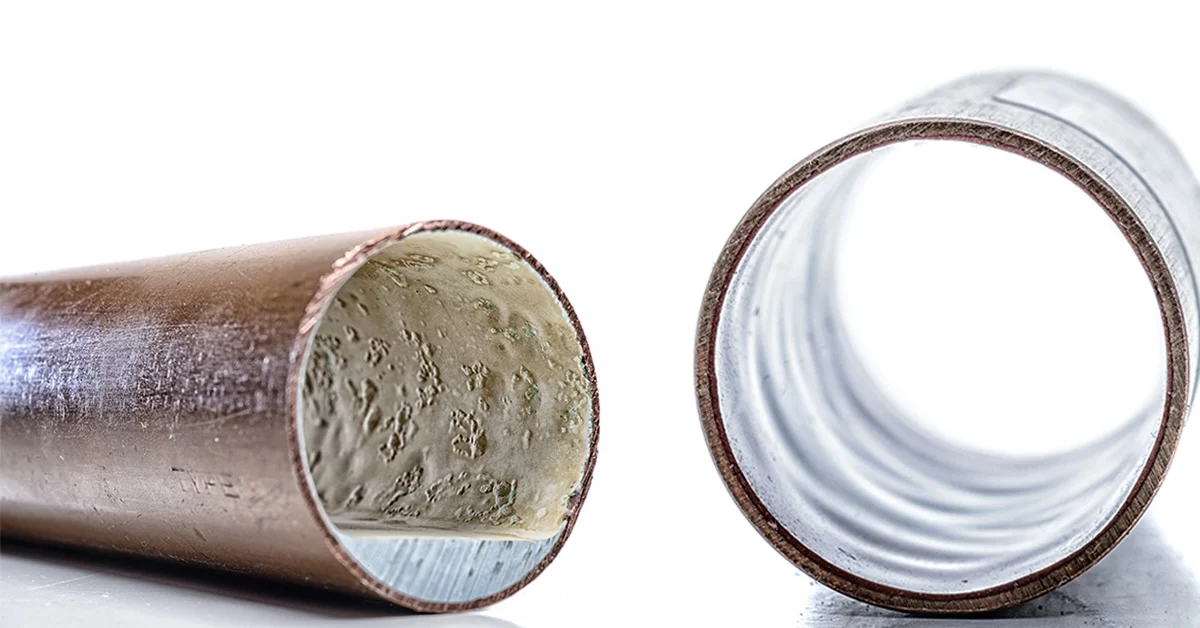
We often talk to apartment owners/operators and condo Board members who think that lined pipes will perform just as well as unlined pipes. Unfortunately, this isn’t always the case. Epoxy coatings reduce the inside diameter of each pipe. And while this loss may be minimal in larger-diameter piping, domestic water supply lines are often smaller, so they lose a proportionally larger percentage of their capacity.
This can affect both performance and compliance. Your plumbing systems were engineered to meet plumbing code based on specific pipe diameters. Altering those dimensions with lining can end up slowing flow as well as potentially bringing your piping below code requirements.
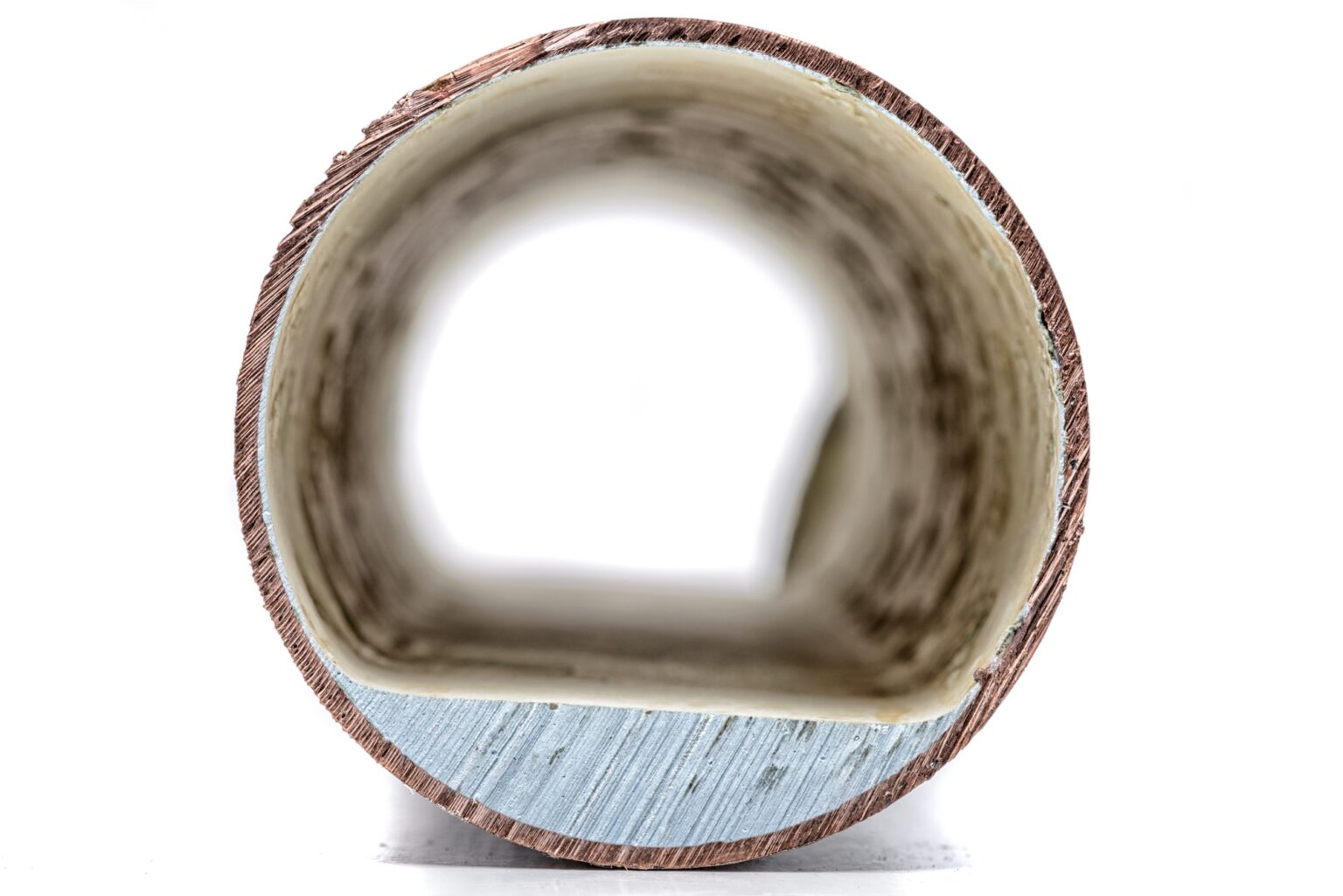
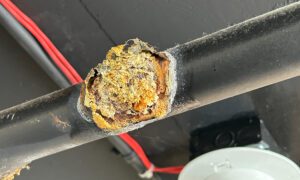
Epoxy bottom pooling in a copper pipe.
Even when the lining is thin enough that your interior pipe diameter remains in compliance, poor installation techniques can create or exacerbate performance issues. For example, as the epoxy settles during application, it may pool along the bottom of the pipe. This flattens the circular shape that ensures even flow. Over time, this uneven lining (commonly called “bottom pooling”) can lead to turbulence and decreased water volume, as well as further slowing flow.
Pipe Lining’s Impact on Pipe Maintenance
Pipe lining leads to substantial changes in the methods your in-house and service teams use to perform pipe maintenance. Soldering pipes with a torch, for instance, is a routine practice for creating watertight joints when repairing metal domestic supply lines. That option is off the table when you’ve lined your pipes. Soldering melts the epoxy plastic resins, which can create a toxic goopy mess as well as fire hazards and blockages.
A California lawsuit shows how serious these risks can become. Court documents allege that workers used an open flame torch on epoxy-lined piping, leading to a fire that caused severe damage to several condominium units.
Soldering isn’t the only potential issue. To avoid applying heat to lined pipes, service providers often use mechanically formed or “press-fit” joints to connect new piping to lined piping or to repair sections of lined piping. But even this maintenance method can create problems. These fittings require high pressure to seal properly. In some cases, this pressure cracks the lining, leaving sections of the pipe unprotected and susceptible to delamination (meaning water gets between the liner and the pipe it’s meant to cover and corrodes the pipe). Also, loose pieces of epoxy can break off, causing clogs and lower water pressure.
Lack of awareness that pipes have been lined can be a significant maintenance issue, as there are no visible clues from the outside of the pipe that there is lining inside the pipe. Turnover among maintenance and property staff compounds the problem. When a new technician or plumbing vendor isn’t informed about prior lining work, they may carry out a repair as though the pipes are unlined, leading to potential safety incidents.
In Conclusion: Pipe Lining or Repiping?
We hope that, in reading this series, you have a better view of the risks and potential problems that can arise when you pursue a pipe lining project.
Whether you decide to line your aged or defective domestic piping system or replace it, it’s important to be armed with the facts. These are large-scale, expensive, and often invasive projects, and for the health and safety of your residents and your investment, it’s important to make the right call.
As we close this series, the conclusion is consistent: pipe lining introduces many layers of complexity that property owners must consider and be prepared to accept. For domestic water supply piping in particular, our experience leads us at SageWater to believe that a full replacement is a more suitable solution than epoxy lining. We’ve seen that repiping an aged or defective domestic water system is more reliable, lower-risk, easier to maintain, and often more cost-effective than lining.
If you are considering pipe lining for your community, we highly recommend obtaining a repipe bid at the same time, to effectively compare the costs, benefits and risks of each option. To learn more, contact SageWater for a free consultation on your building’s specific piping concerns.