









Is your apartment or condominium property experiencing frequent leaks? You’re in good company: for multifamily communities across the country, leaks are becoming more and more common as decades-old plumbing and mechanical systems reach the end of their useful lives.
When your piping infrastructure begins to show its age, it can be tempting to chase leaks, dealing with incidents as they happen and replacing only the pipes where leaks occur. Even if you know you have a systemic problem, you may be hesitant to replace it all and consider replacing only problematic sections. Either way, you may wonder, “Can I just replace the bad pipes?”
We understand the impulse! Why fix something that isn’t (yet) completely broken? A pipe-by-pipe approach can seem like the frugal, financially responsible route. Unfortunately, these piecemeal approaches don’t solve the underlying problem. And in the meantime, your system will continue to age.
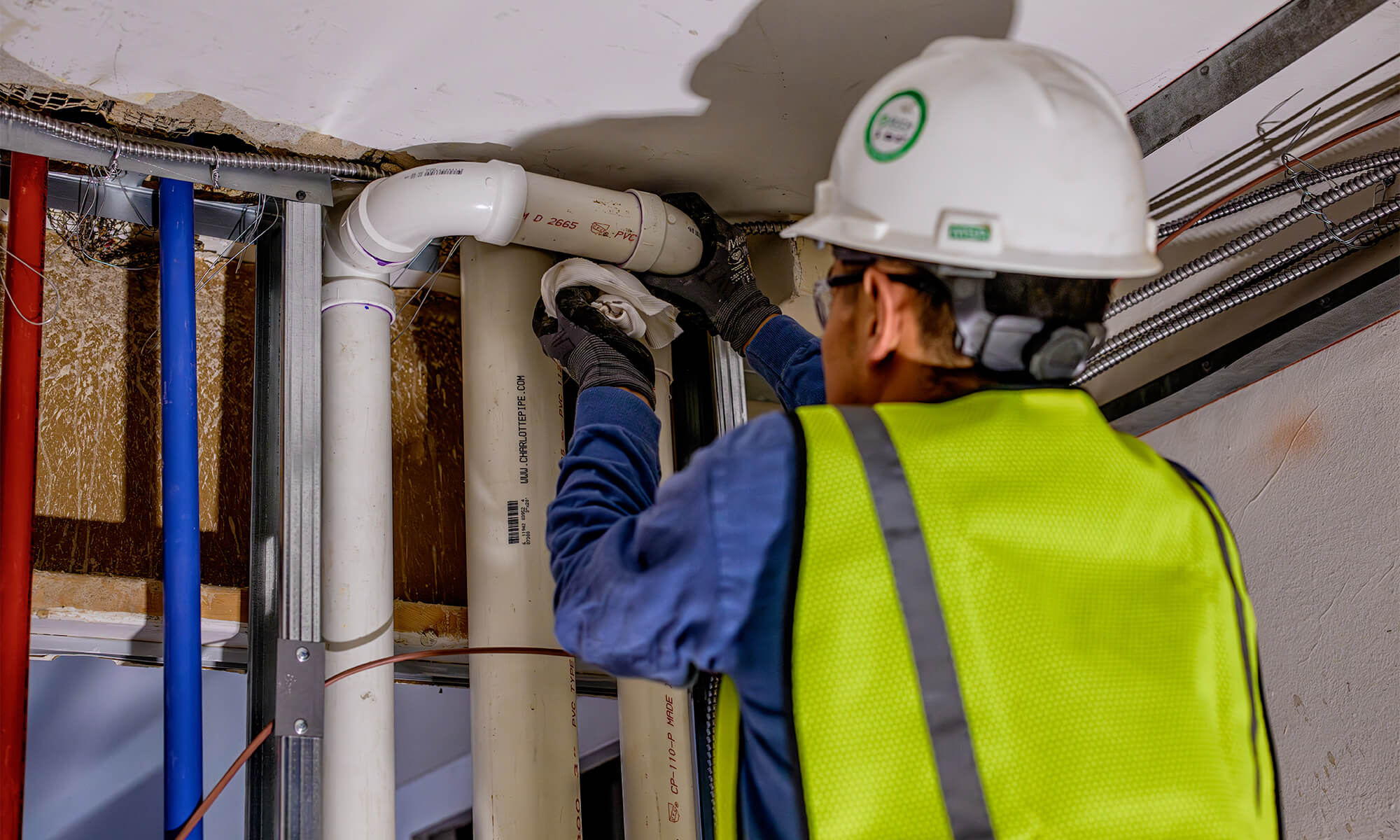
For plumbing and mechanical systems at the end of their useful lives, the most effective solution is a full system replacement or repipe: taking out the old pipes and replacing them with new ones. It’s the straightforward way to end recurring leaks and ad hoc repairs (and the maintenance costs and disruption they cause) for good.
Why Can’t I Just Chase Leaks or Take a Pipe-by-Pipe Approach?
Chasing leaks, or treating each incident as an isolated event, puts your property in a bad spot: dealing with multiplying repairs while your system accumulates wear and tear. Issues worsen, ratcheting up maintenance costs, requiring larger budgets with each passing year, and becoming more disruptive to residents over time.
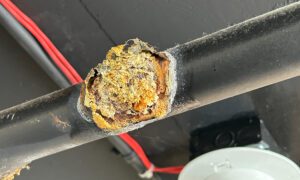
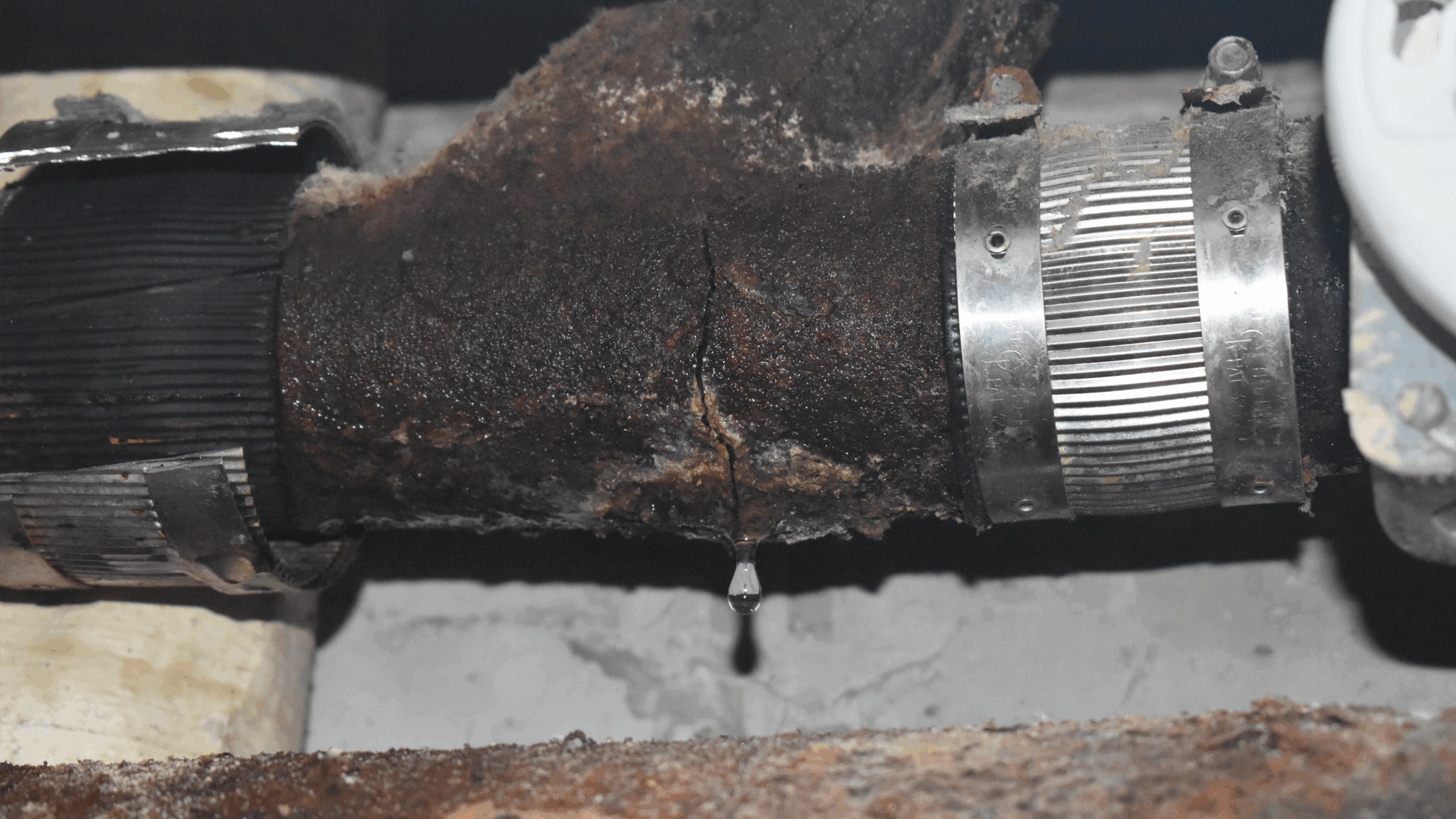
Just like chasing leaks, trying to identify and replace sections of “bad pipe” is a losing game. How will you know which sections of your system are the problem? Most piping is out of sight, behind walls or under insulation. Even when you can see your pipes, you can’t rely on visual inspection alone to know which sections are at higher risk. That’s because many age‑related failures start inside the pipe. Corrosion and pipe wall thinning typically occur from the inside out, which means pipes that look fine on the outside may be close to failing internally. Without comprehensive testing at building scale—which is cost‑prohibitive for most communities—it’s nearly impossible to pinpoint every section that “should” be replaced.
(Of course, you could get a more affordable forensic analysis like the SageWater Pipe TEST—a Technical Evaluation of System Threats—which provides a fact-based report on the condition of your system. In any case, you can’t know for sure which sections to replace and which to leave in place to age and fail later.)
A critical problem with these “spot fixing” approaches is that each time you replace a piece of the aging infrastructure, you multiply the number of points of failure. Continually joining new pipe to old creates a patchwork of connections throughout the building that are more prone to failure and accelerate the system’s deterioration.
Finally, it bears repeating that spot fixing ignores the basic fact that the entire system is beyond its useful life. Once this happens, you’re on borrowed time. Any original pipe in that system is inherently at risk of failure—and that risk only increases as the months and years go by.
Meanwhile, continuing to operate a system known to be beyond its useful life can mean exposure to liability if a major leak damages multiple units or causes injury.
The Benefits of a Full Pipe Replacement
Instead of chasing leaks or trying to replace just the “bad” pipes, take back control with a system-wide solution that will solve the problem once and for all. Rather than repeatedly reacting to leak incidents, a community‑wide project allows you to address the root cause of leaks. Benefits of a full system replacement—performed all at once, or in phases-include:
- Lower and more predictable maintenance costs. Once chronic leaks are resolved, maintenance spending shrinks and becomes easier to forecast.
- Reduced uncertainty and risk. A complete system replacement removes the unknowns tied to aging infrastructure, helping owners and residents avoid issues like sudden failures, backups, and water damage.
- Improved resident sentiment. Stopping leaks and putting well-functioning pipes into the property significantly boosts resident quality of life.
- A single warranty. Replacing an entire system at once means that it’s all under a single warranty, avoiding future claims complexity and headaches.
- Energy efficiency. A new, modern system can also bring efficiency benefits, lowering energy costs for your community.
Of course, you may still need to triage leaks as you figure out how you’ll fund your capital improvement project. Planning for a systemic repipe takes time—in our experience, from a few months to more than a year.
It’s worth getting started soon, particularly if your plumbing or mechanical infrastructure is well beyond its estimated useful life, or if you’re experiencing frequent leak incidents.
Taking a proactive approach to planning your repipe means you can act thoughtfully, rather than scrambling when there’s a catastrophic leak or when the situation has become untenable.
If you’re dealing with repeated leaks and want to explore your options, get in touch for a free consultation.
How to Know It’s Time for a Pipe Replacement
So—how do you know when you need to move past “chasing leaks” or “a repair here and there approach” and pursue a system-wide replacement?
There are practical tools and data‑driven services available to help you understand what’s happening inside your building’s plumbing and mechanical systems.
- Know the average lifespan of your systems. Most plumbing and mechanical systems last 25–50 years, but the exact lifespan will depend on the particular system, as well as the material it’s made with. Fire suppression systems and drain, waste, and vent systems can last 50 or more years. Domestic water supply systems last around 30 years. HVAC and mechanical pipes last 25–50 years.
- Watch for age‑related warning signs. Look out for symptoms of aging plumbing and mechanical systems. In older buildings, common indicators of failing systems include more than four leaks a year, sudden changes in water pressure, discolored water, increased maintenance costs, and higher water bills that can’t be explained. Specific signs will depend on the system—for example, bad odors can point to issues with corroded vent piping. (Our Pipe-Smart Checklist can help make sure you identify all of them.)
- Track recurring issues. Make sure you know how often leaks and other symptoms are occurring, and that you have a “source of truth” you can reference to analyze issues over time. The SageWater Leak Log is one option!
- Get a forensic pipe analysis. A SageWater Pipe TEST (Technical Evaluation of System Threats) provides an inside look at your pipes using tools like cameras, ultrasound, and lab analysis. It offers tailored recommendations about timing, scope, and budgeting. We’ll also tell you if it’s fine to wait before repiping and prioritize other capital improvement projects. For example, one community found out that the main source of leaks was actually their roof.